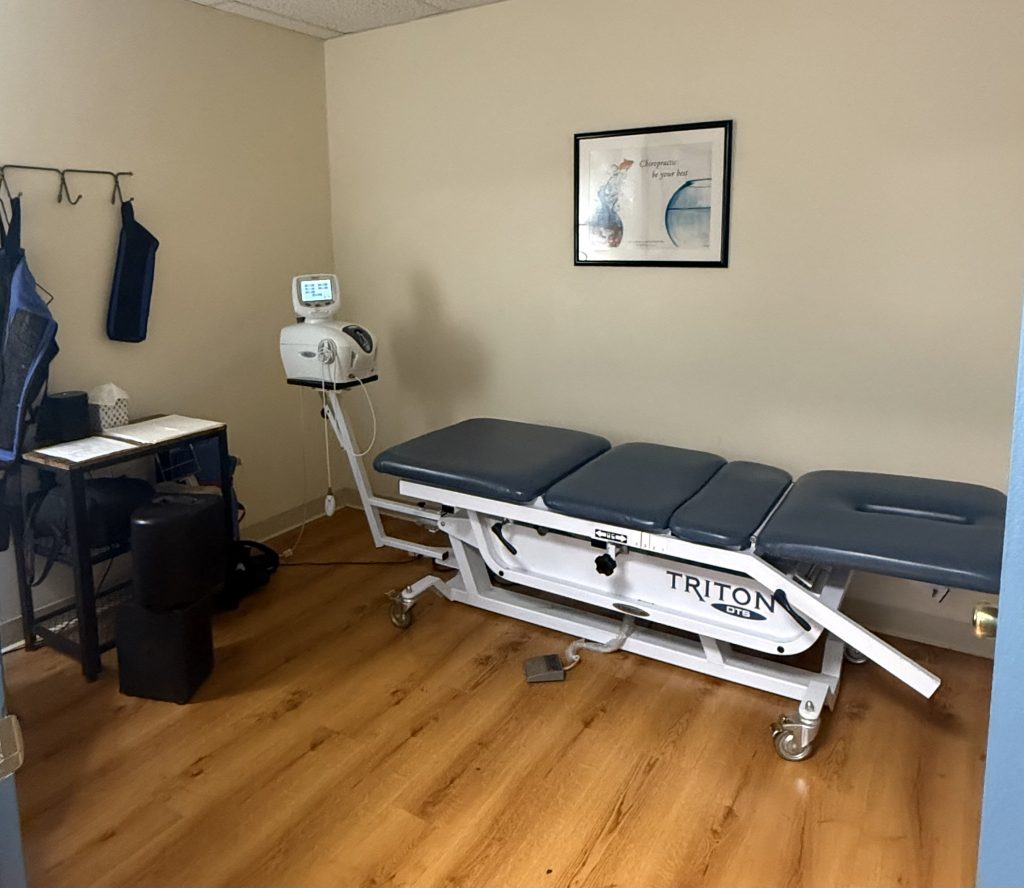
Spinal Decompression
Spinal decompression is a form of mechanical traction that uses intermittent, controlled distraction of the spine. This approach is designed to create intersegmental distraction while minimizing muscle guarding.
Through this process, spinal decompression may help promote fluid movement within the intervertebral discs, reduce intradiscal pressure, and decrease pressure surrounding irritated nerve roots. In some cases, the decompressive effect may help reduce mechanical irritation of a disc or nerve, allowing irritated tissues to calm and support the body’s natural healing process.
Spinal decompression is commonly used as part of a conservative treatment plan for certain cervical and lumbar disc conditions. It may be particularly helpful for patients experiencing symptoms such as sciatica, cervical radicular pain, and other conditions involving nerve-root irritation.
Spinal decompression may also be incorporated into treatment plans for chronic degenerative spinal conditions, often in conjunction with spinal manipulation and other appropriate therapies. By promoting movement and fluid exchange within the tissues surrounding the spinal joints and discs, decompression may help support mobility, comfort, and overall spinal function.